Rememit
A learning tool designed to help users master new words through spaced repetition.
Overview
Most vocabulary isn't learned in classrooms. We discover new words while watching movies, reading articles, listening to podcasts, or talking to people. Unfortunately, most of these words are forgotten just a few hours later. Rememit started with a simple question:
How can we reduce the distance between discovering a new word and making it part of long-term memory?
The result was an iOS app built around frictionless vocabulary capture and long-term retention using the Leitner System.
Rememit
Dictionary + flash card + habit tracker, 2024
The Origin
The idea came from a conversation with a friend who had recently moved abroad and was learning the local language. He described a simple workflow: whenever he encountered an unfamiliar word while watching a movie or having a conversation, he saved it and reviewed it later using spaced repetition. What made the idea interesting was that learning started from real life rather than predefined lessons or vocabulary lists.
Naming
The name Rememit originated from the phrase "Remember it." The repeated letters subtly echoed the idea behind the product itself: repetition over time. In a way, the name reflected the mechanics of the Leitner System that powered the learning experience. It was also short, memorable, and available across domains and social platforms.
The Problem
Existing flashcard apps already solved spaced repetition, but most of them shared similar problems:
- Generic experiences built for every use case rather than language learning.
- High friction when adding new vocabulary.
- Outdated interfaces that didn't feel native to modern mobile platforms.
Rememit
Dictionary + flash card + habit tracker, 2024
Design Principles
Three principles guided the product:
- Capture instantly: adding a new word should take seconds.
- Stay out of the way: the experience should feel native to iOS.
- Focus on vocabulary, not flashcards: users care about remembering words, not managing decks.
The Solution
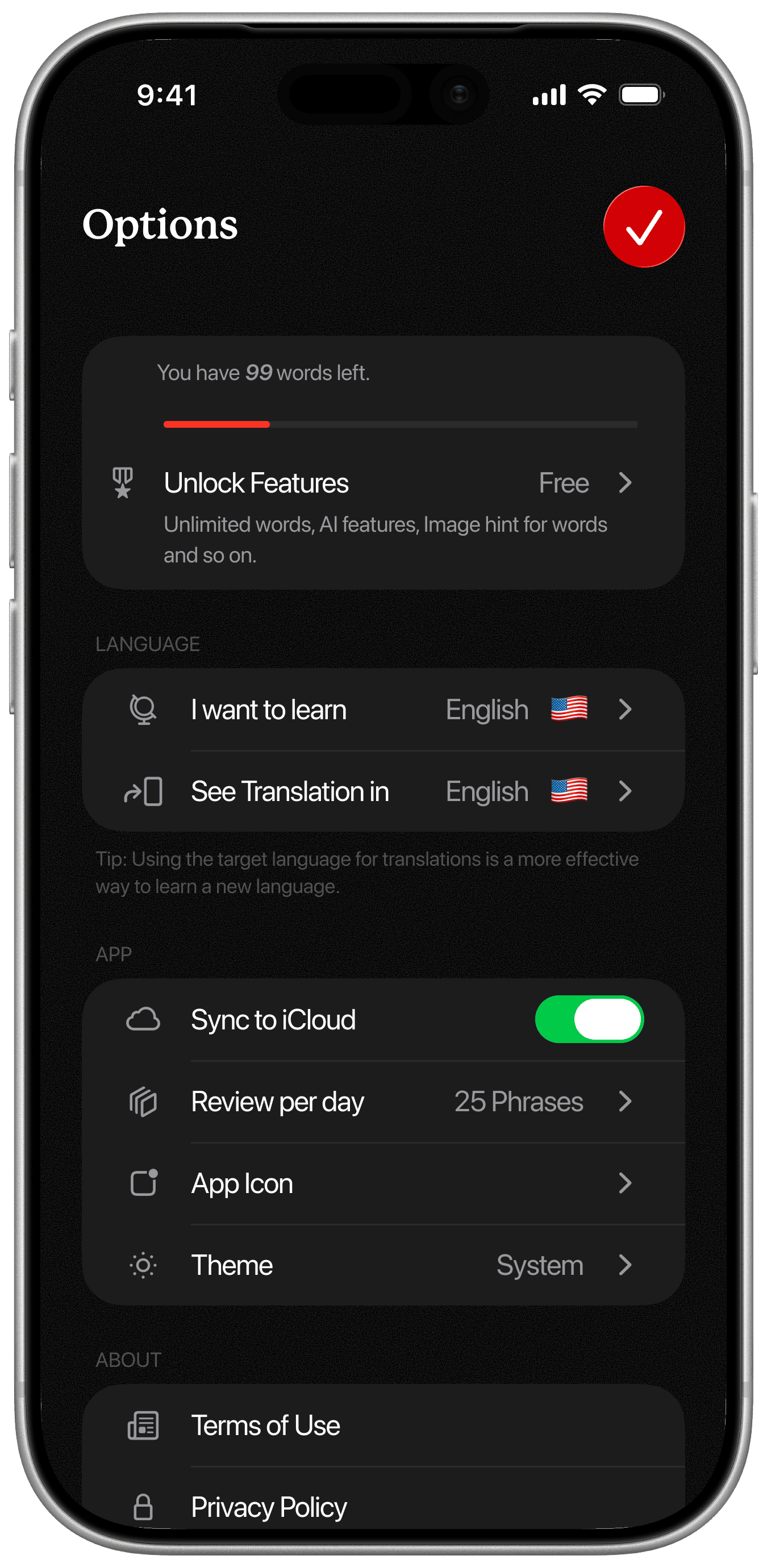
Users selected their native and target languages and could then add vocabulary in multiple ways:
- Importing curated word packs.
- Adding words manually.
- Sending words directly from other apps using the iOS Share Sheet.
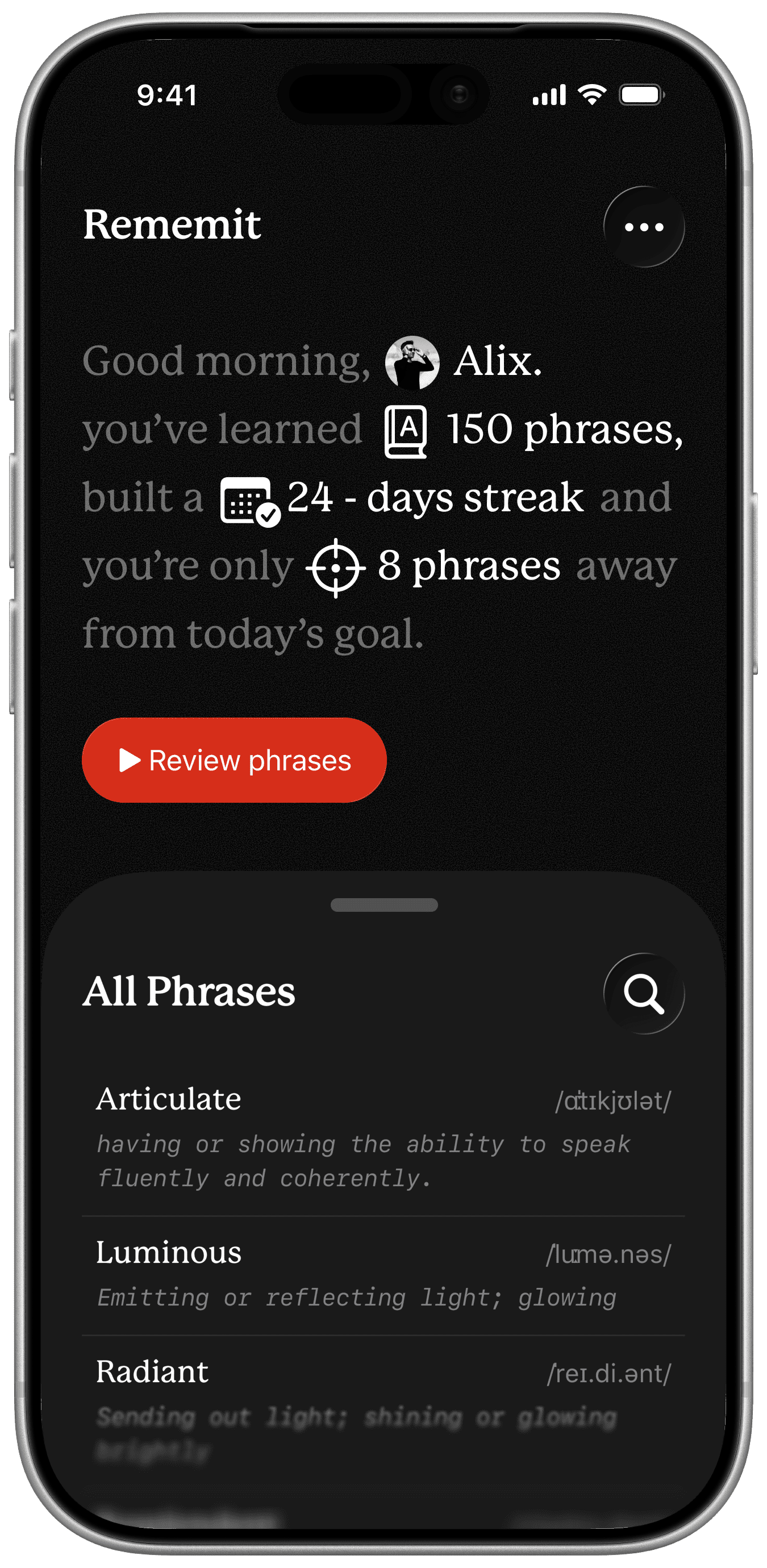
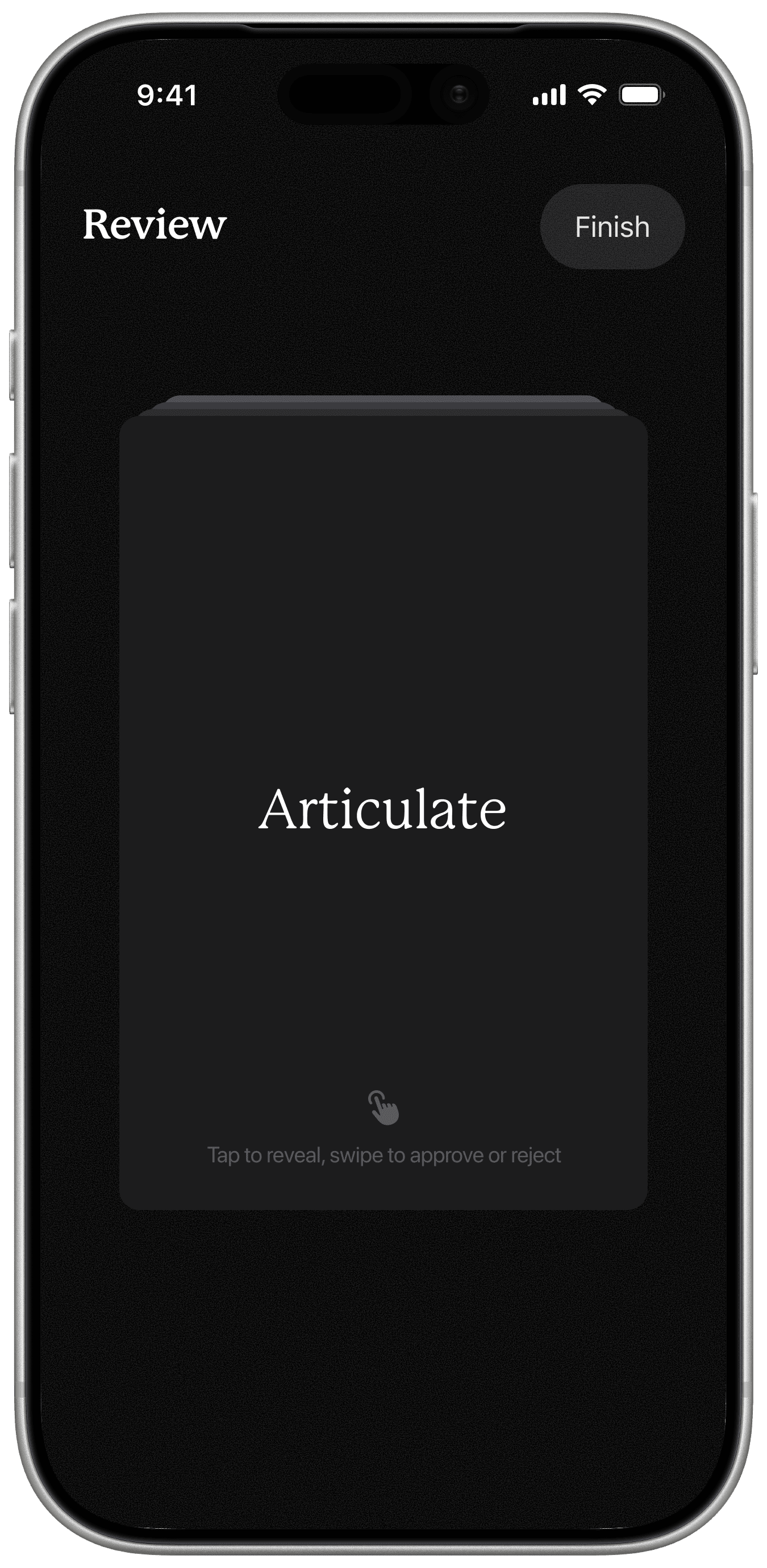
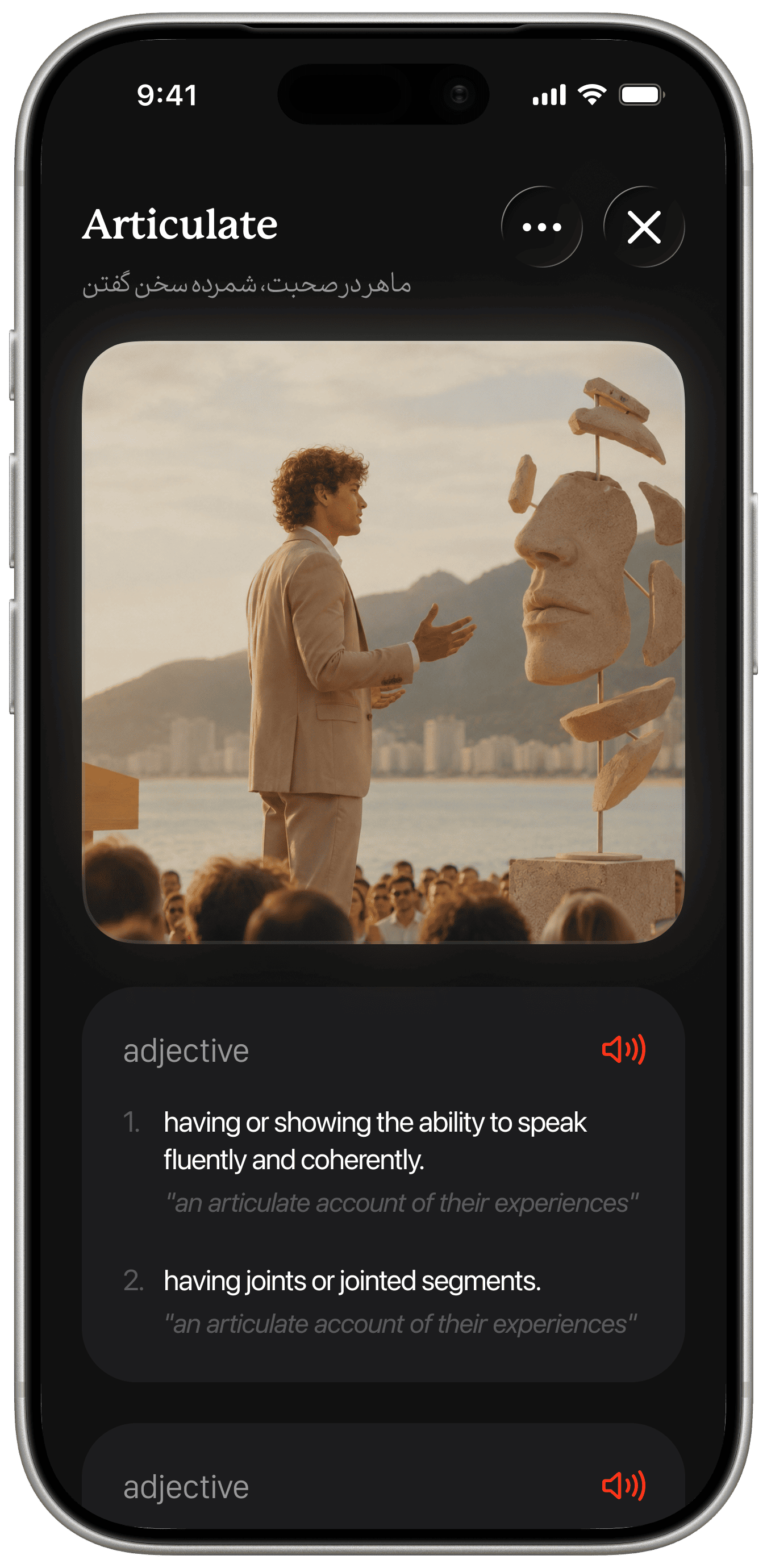
After a word was added, Rememit automatically enriched it with meanings, grammatical roles, and related forms, significantly reducing manual work. The review experience was built around the Leitner System, gradually increasing review intervals as words moved toward long-term memory.
Rememit
Dictionary + flash card + habit tracker, 2024
Visual Design
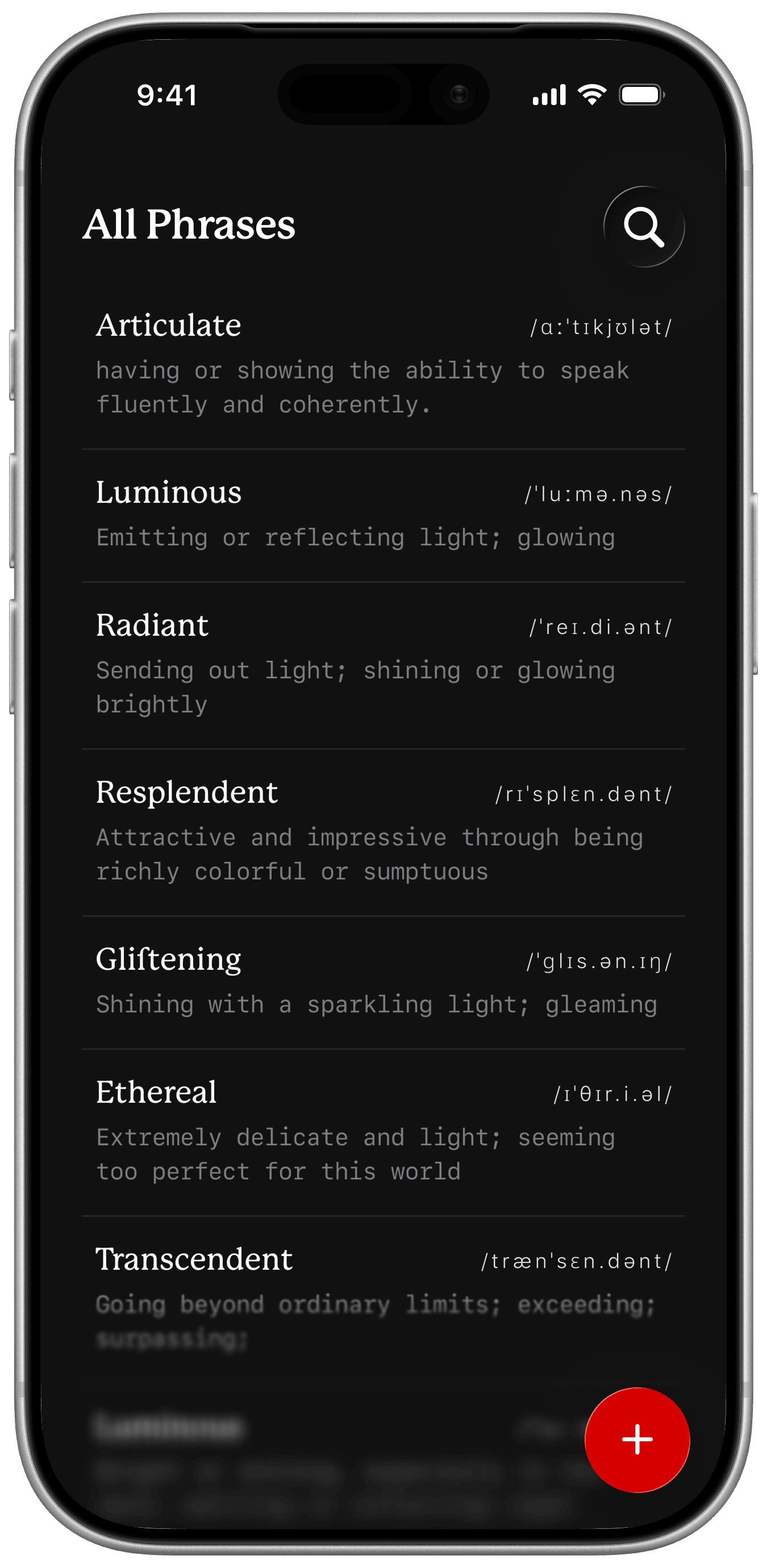
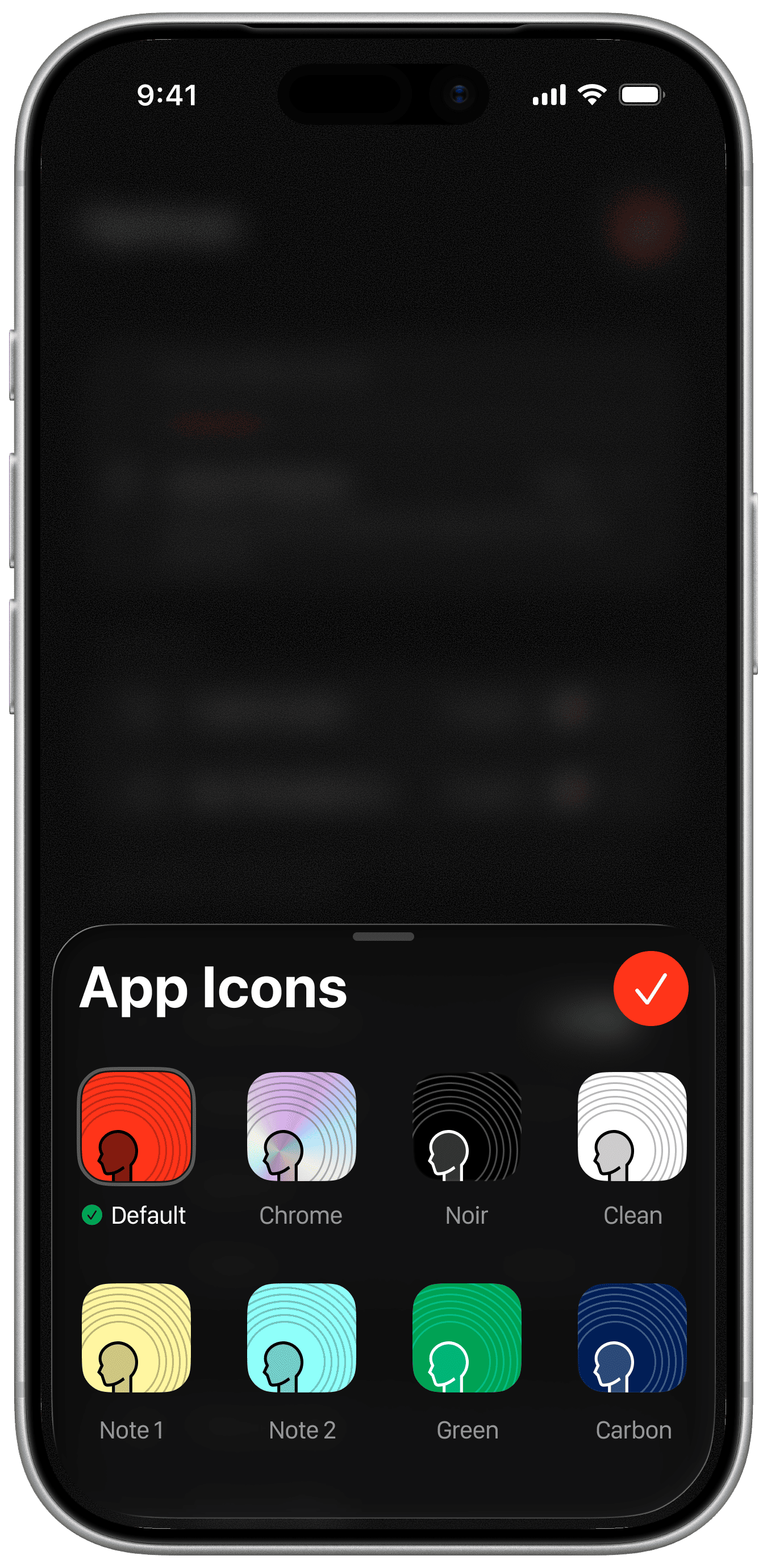
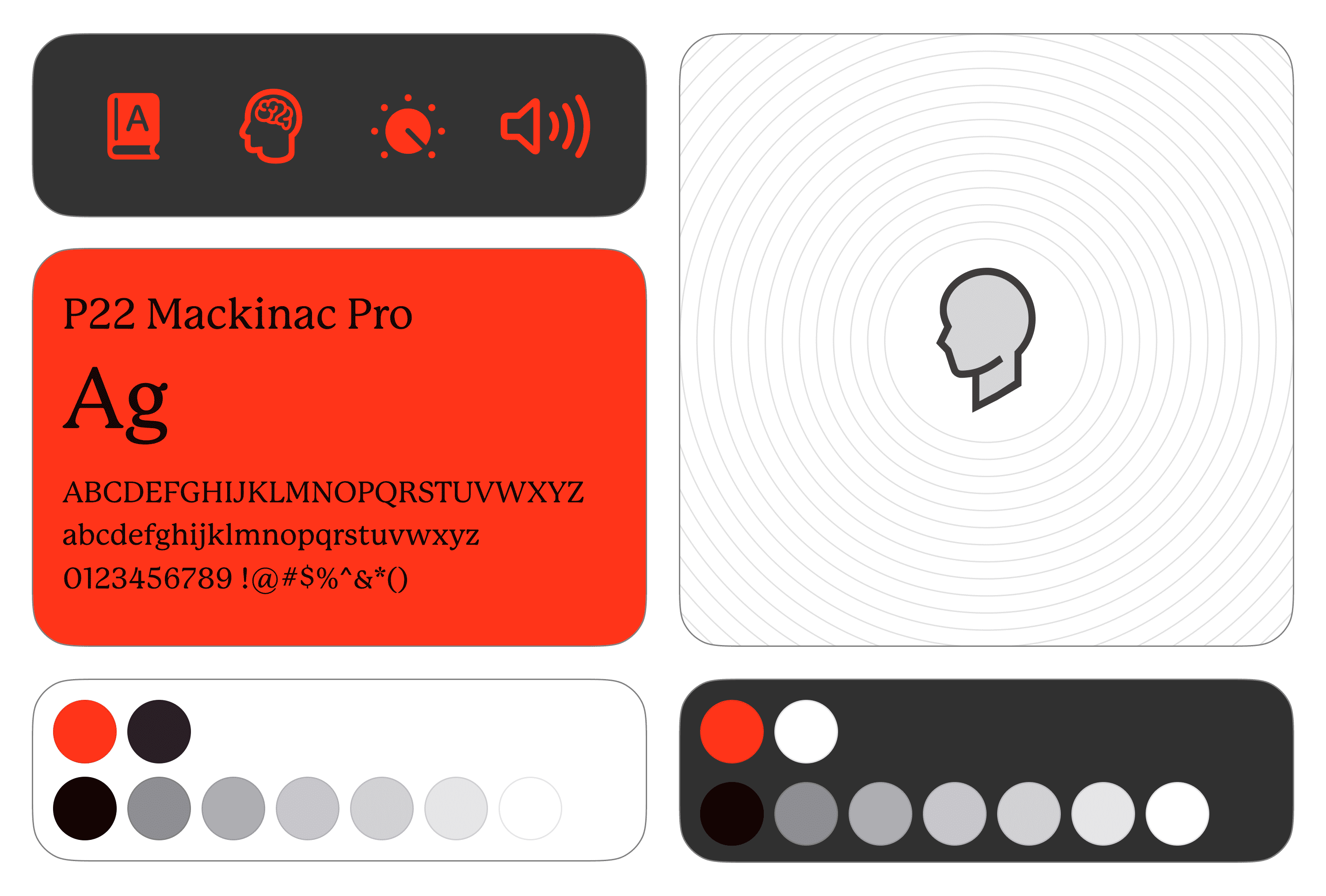
From the beginning, Rememit was designed as a quiet everyday utility rather than a traditional educational product. The interface followed Apple's Human Interface Guidelines, used SF Symbols extensively, and relied on familiar iOS interaction patterns. Because the product was heavily text-focused, typography became a central part of the identity. I used P22 Mackinac for vocabulary and titles, combined with SF Pro and SF Mono for supporting content. A restrained color palette and a single orange accent color helped the product feel both calm and recognizable.
Rememit
Dictionary + flash card + habit tracker, 2024
Looking Back
Interestingly, many ideas we explored in 2022 [such as extracting vocabulary from text, processing voice memos, or generating contextual examples with AI] have become practical product features today. Rememit eventually reached release and received positive feedback from early users. More importantly, it became an exercise in designing around real user behavior rather than idealized learning workflows.